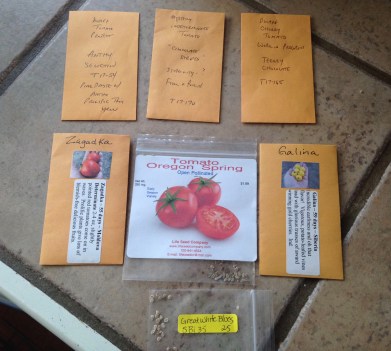
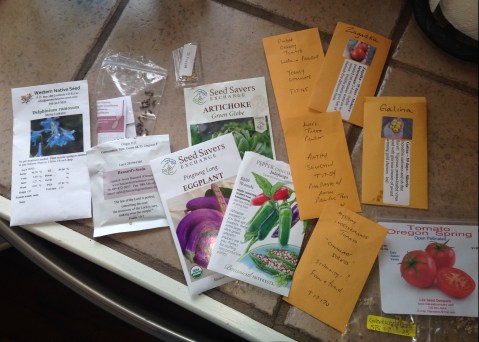
A sampling of the varieties I grew. Front l to r: Teensy Chocolate, Galina, Chocolate Stripes; Back l to r: Zagadka, Black Krim and Cherokee Purple, Great White Blues; Middle l to r: Oregon Spring, Pink Paste
This year was a bit of a disappointment compared to last year’s bonanza. May was cooler than usual when the plants were set out at the end of the month. June had many overnight lows in the 40’s which slowed growth down. When it finally started to warm up with lows in the 50’s and 60’s in July, the plants were 2/3 the size they were last year, even the ones in the tomato accelerators. Fruit did set heavily in July when it warmed up, but the yield wasn’t as good since the plants were smaller. I also didn’t grow the same varieties as last year, so that was likely a factor. Luckily, mild weather continued into early October so we had a late and diminished but tasty harvest.
I plant tomatoes in grow bags and Earthboxes. To keep the plants warmer, I use tomato accelerators from Gardener’s Supply, which are pop-up white plastic tubes. You can also purchase a kit that comes with a grow bag and a staking system.
I usually order Black Krim and Cherokee Purple plants from Seed Savers Exchange. They transplanted well, but grew slowly all of June and they were in the growth accelerators. I did plant one Black Krim in an Earthbox without protection and it did well although it was also smaller than last year’s vines.


One of the largest Black Krims of the season left; to the right Zagadka and Pink Paste go into the oven to roast and intensify their flavor before freezing.
I tried two varieties successfully grown at 8000 ft in Colorado outside of the growth accelerators, and they set fruit well. One was a determinate bred in Russia — Zagadka. Although any homegrown tomato is better than the supermarket ones, Zagadka’s flavor and texture weren’t outstanding to my taste preferences. Its shape resembled the industrial supermarket tomatoes that are very firm and smooth and round – maybe that’s what put me off. Its flavor was fairly tart, but not intense.
The cherry tomato Galina set lots of fruit and had fine flavor on the sweet side, but developed leaf diseases. Our cool June nights may have contributed and I was re-using potting soil. My plan is to grow a Galina and a Sungold to compare flavors. I’m also going to try to solarize the used potting soil this year to kill the fungal spores and bacterial diseases.
Another new to me tomato was Oregon Spring, an older variety determinate tomato bred for cool climates. I picked up the seed at a home show from a vendor that grows them in Colorado. It set fruit well and staved off leaf disease until end of season. The flavor was good: tomato-ey, and on the tart side, but it didn’t wow me.
Great White Blues (thanks to Nikki Jabbour for the recommendation ) was a pleasant surprise, setting fruit well in the non-protected earth box and setting huge fruit inside the protected tomato accelerator. I had a bit of trouble determining when it was ripe and let a couple go too long — they were mushy with not much flavor. However, picked when the white part was palest creamy yellow they had intense flavor a bit on the acid side, but nicely balanced. I’m growing that one again.


A Great White Blues Becomes a BLT
I still had seeds of Chocolate Stripes that Craig Lehoullier sent me in 2018. I grew the rest of them this year. The fruit was about half the size of last year’s but still had good flavor. I saved seed and will try again because this tomato is beautiful and has good balanced flavor.
I grew two dwarfs from seed Craig sent: Teensy Chocolate and Pink Paste with Antho (the dark bluish color from anthocynanins ). The cherry Teensy Chocolate was disease resistant and very tasty, but tended to split if not picked very carefully. I grew two Pink Paste plants which were quite different in character and flavor. One was about 2 inches long and pink with not a lot of antho. I thought this one lacked flavor intensity. The other plant produced tasty 1-1/2 inch fruit with lots of bluish antho shoulders. I saved seeds and sent them back to Craig for further experimentation.


Seedlings on May 5 and the container garden on June 13. The plants went outside at the end of May and were significantly smaller than mid-June 2018, likely due to cool nighttime temperatures.
Next year’s list is just started, but it will include Black Krim, Cherokee Purple, Great White Blues, Berkley Tie-Dye, San Marzano, and Sungold. I’ll try Galina again in fresh potting soil.
So now we are stuck with store-bought tomatoes until next season. At least there are some varieties available with more flavor than the pink flannel industrials. I hope you had a great tomato harvest if you grow them — I’m hoping for a milder start to the growing season here in 2020!