Colorado’s Apple Heritage

Abundant flowering Apple trees.
Old Apple Orchard in Bloom; Photo Credit: 123rf.com

I’ve been writing monthly articles for the Horticultural Art Society of Colorado Springs‘s newsletter and thought I would share some with you since that work has kept me away from my blog.  Last month’s was about the Colorado apple industry which had its heyday from the late 1800’s to the early 1900’s.

“Recently I came across an article about the rediscovery of the Colorado Orange apple, which was thought to be extinct. I was surprised to find out that in the late 1800’s there was a successful apple industry both along the Front Range including Fremont County and in the Western part of the state.

Though they were told that orchards wouldn’t grow in Colorado due to the high elevations, settlers in 1800’s experimented with different growing techniques and varieties and created a thriving apple industry.  In 1922, there were 48,630 apple trees in Montezuma County, and at least 50 different varieties of the fruit. The apples varied widely in color and flavor and keeping quality. Some apples were bred for cider-making as well as eating. These apples were called “spitters” due to tannins that made them unpalatable, but excellent for making hard cider. Contrast that number with the 10-15 varieties carried by local nurseries today.”

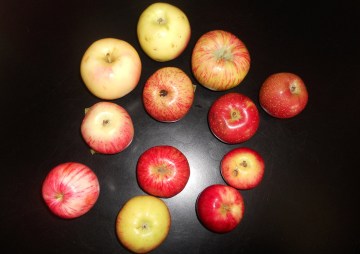
groupapplephoto_custom-2ddf72f17728d212a60b8bb1deaf1353586a1398-s1500-c85
The Maiden Blush, Chenango Strawberry and Duchess of Oldenburg heirloom apples found in Colorado. Photo Credit:  Adalyn Schuenemeyer /Montezuma Orchard Restoration Project

You can read the entire article here, including how the Colorado Orange apple was rediscovered.


The Tomato in the Family Room

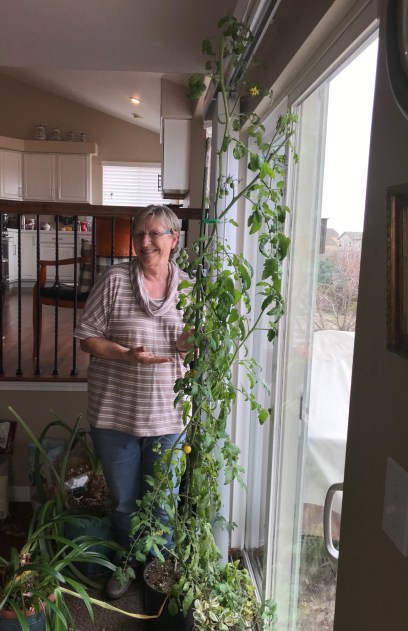
IMG_3969Tomato Fire Fly on April 17, 2020 

In June 2019 I was given a tomato plant —  the AAS winner  F1 hybrid Fire Fly.  It started producing small sweet yellow tomatoes later than my other plants since I got it so late. Since it was only around 5 feet tall, I’d been hauling it in and out of the walkout basement if frost threatened as tomatoes were still ripening.  I continued moving it in and out into November.

Meanwhile, I’d read that some gardeners in Colorado Springs were successfully growing tomatoes in winter indoors under lights. I didn’t have grow lights or a greenhouse, but I did have a south-facing patio door that I thought might get enough daily sun. The plant I was nursing along was developing leaf disease, but there were several suckers with healthy foliage.

I picked two suckers off the plant and put them in water. Both rooted and I moved them to 1 gallon pots. One plant took off and started growing well; the other just sat there.  After 2 weeks, I gave up on it. The remaining plant was getting at least 4 hours of direct sun daily. I used Espoma Tomato Tone as fertilizer at about 1 Tbsp. per week.

tomato This is the plant on December 26, 2019.

It continued to thrive and grow. Blossoms developed on January 2, 2020. On January 7, I had a nice bloom cluster and the plant needed a taller stake. I “flicked” the blossoms to help pollinate. Tomatoes self pollinate which is a good thing since I only had one!  And lo and behold — on January 17 I had tiny tomatoes.

Fire Fly continued its upward growth putting out lots of blossom clusters.  There was no sign of leaf disease during January.  Water, organic fertilizer and 5-6 hours of direct sun worked to produce many clusters of green tomatoes. I picked the first ripe ones on March 8 and had a handful of very tasty little tomatoes on March 15.

We have not had huge harvests, but the occasional handful of home grown tomatoes has been very welcome in salads and as snacks. When Firefly became taller than its stake, I topped it towards the end of March to keep it in bounds.

Alas about two weeks ago I noticed signs of leaf disease. Since this plant was a rooted sucker, I’m sure the spores were there all along. I’m actually surprised it took this long for them to take hold.

I should have put the plant into a 5 gallon pot, but it had gotten very unwieldy and I decided to leave it in its 1 gallon home rather than risk breaking the main stem.  I’m sure it is stressed by being root bound no matter how much water and fertilizer I give it.  However long it lasts, I am grateful for its bounty.

The winter tomato experiment was far more successful than I expected and I’m going to do it again next year. I will try Sungold, which is an F1 hybrid  with almost a cult following, and also a dwarf tomato.  I think F1 hybrids may have an advantage since they are disease resistant and bred for vigor and fruit production. Dwarf tomatoes were created for container growing and are great space savers.

IMG_3927
Yum!

Next year, I will start plants from seed in late summer and let them grow outdoors until frost. Then I’ll let them hog the sunlight in the patio door window.  I hope the amaryllis aren’t too bummed about sharing ;-).   My success I’m sure is due to our intense Colorado sunlight and my south facing window. Other Colorado gardeners have had success with grow lights, but I’m lucky I don’t need them.  Of course,  I can always dream of a greenhouse…

A Little of Each

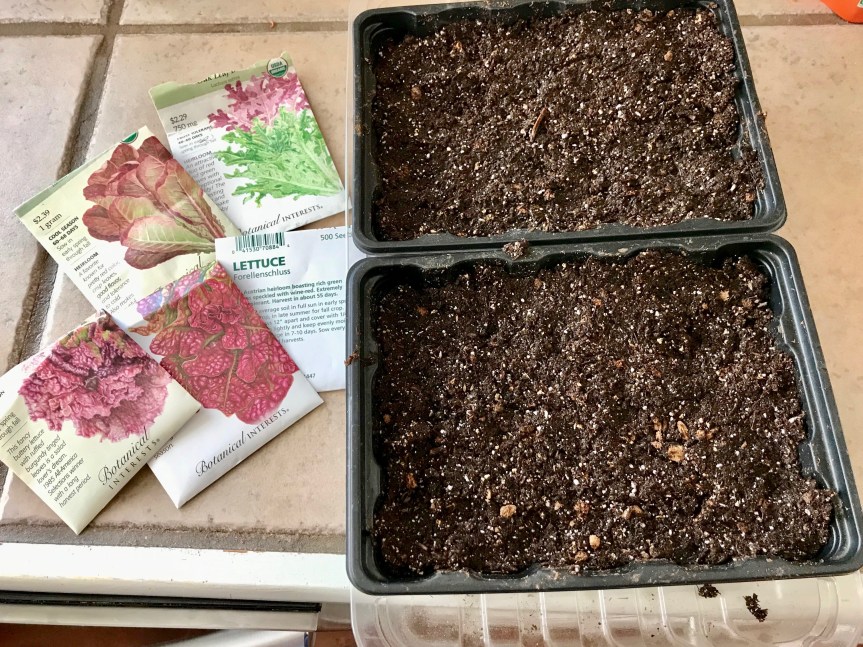
Time to start some lettuce.  I have seeds from 2017 up to 2020, so I sowed the older ones thicker.  As you can see, I really like red lettuces!  My flats are mushroom containers that I poked holes in for drainage filled with sterile seed starting mix.  These flats will go onto a grow mat and will be covered with a plastic lid to keep moisture in until they germinate in 5-10 days.  Then they will be planted outside in containers.  I’ll have frost cloth available to protect them from really cold temperatures.  They should be fine with overnight lows in the upper 20’s.  Though they will likely survive colder temperatures their growth will slow and I want my plants to keep on growing.

IMG_3911

Valentine Houseplants with Heart

In our long winter season, houseplants are a must to keep a gardener’s spirits up with green and blooming plants to nurture.  After drooling over the seed and plant catalogs arriving daily and dreaming of Spring, I often visit my favorite local nursery’s greenhouse for a plant fix. While inhaling the humid greenhouse air and enjoying being surrounded by the greens, golds, blues, and silvers of living plants, I noticed some beautiful plants with heart shaped leaves. I thought I would love to receive one of these plants as a Valentine gift instead of cut flowers which last around a week – or maybe even more than chocolate.

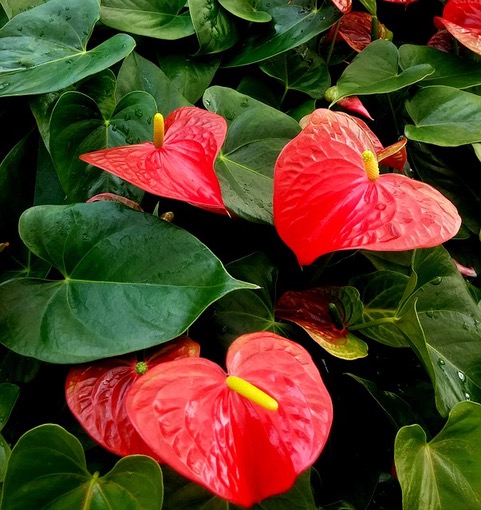
One plant I really admired  has heart shaped leaves and flowers — the anthurium.

anthurium-2454383_640
Photo By: KoalaParkLaundromat from Pixabay

Anthuriums (Anthurium andraeanum) have heart-shaped leaves and “flowers” which are really spathes, or specialized bracts.  I love the shiny, waxy texture of these spathes.  You can find them in shades of red, pink, white and even green.  Anthuriums will bloom continuously if they have adequate light, fertilizer and moisture.  They like bright indirect light and humidity.  This tropical is sensitive to cold temperatures and can die if the temperature drops below 55F, so it is not for the cool greenhouse.  As a bonus, anthurium is a natural air purifier! 

I recently wrote an an article for the Horticultural Art Society’s newsletter which describes more Houseplants with Heart.  You can read it Here — scroll down the page to find out about Heart Fern, String of Hearts and more!

The Quest for the Mild Habanero

Over the years, we’ve tried and failed to tolerate the scorching heat levels of the habanero. The Scoville Heat Units range from 100,000 to 350,000 — which is anywhere from 12 to 100 times hotter than a jalapeno.   We’d really like to be able to enjoy their citrusy flavor without pain.

The first mild habanero I tried was Zavory, which I grew several years ago when we lived in Raleigh, NC.  Zavory is described as a “heatless” habanero type pepper having only 100 Scoville Units of heat.  The plants grew and bore a lot of peppers.  I roasted some of them when ripe, and was disappointed in the flavor.  Both my husband Al and I thought there was an aftertaste that resembled old socks, although we have never eaten old socks!  We composted the whole harvest.  Perhaps it is like cilantro — it tastes differently to different people.  I have recently read these peppers are at their best raw or lightly heated, so the aftertaste may have come from full roasting.  Whether that was the case or not, I hope to be more impressed by the two habanero style peppers  I chose for this year.

Many related but milder peppers have been brought into production, and breeders have continued to develop varieties touted to taste like a habanero with little or no heat. When the seed catalogs started arriving I couldn’t help noticing these newer peppers with their enticing descriptions.  So of course, I ordered some.

My choices are from Baker Creek Heirloom Seeds:

mildhabs

Arroz con Pollo (Capsicum chinense) originated in Eastern Cuba and is one of  many seasoning peppers grown throughout the Caribbean.  They are generally have mild or no heat and are used in many Caribbean dishes. They are also added to spice pastes used for seasoning, thus the name.

Habanada (Capsicum annum) was bred by well-known organic plant breeder Michael Mazourek.  It is described as having all the fruity and floral notes of a habanero with no heat.

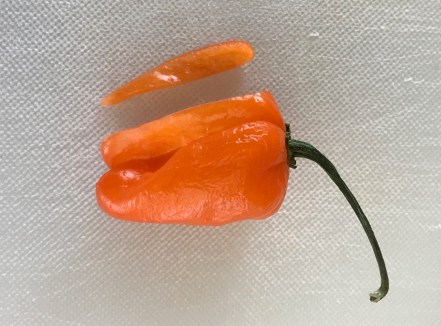
In a few months I will start these seeds indoors to have the largest plants possible when our frost-free date arrives. Meanwhile, they will be stored cool and dry. We will definitely do a comparison taste test with an actual habanero.  Below is the tiny sliver of a habanero I can tolerate and still taste the flavor!

habanero

A Microgreens Experiment with Pea Shoots

IMG_3621

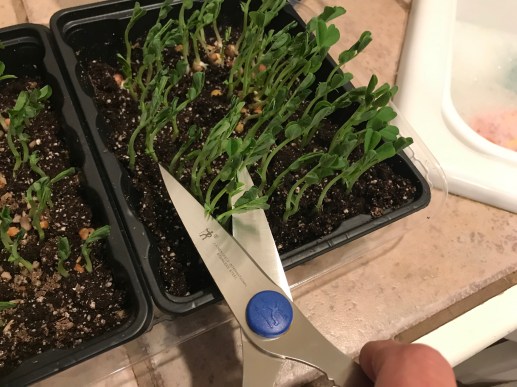
Harvesting English Pea Shoots 

In early November I attended an introductory class to learn how to grow and harvest sprouts and their larger, older siblings known as shoots or microgreens.  If shoots are allowed to grow to 2-4 inches tall, they are called baby greens.

Microgreens and baby greens are packed with nutrition — studies show they can be up to 40 times richer in vital nutrients than their mature counterparts — and they may be grown indoors year round. Many types of vegetables can be grown as microgreens including lettuces, kale, arugula, and peas.

I started with pea shoots since I had tasted them as garnishes and in salads at restaurants and loved the flavor — they taste like peas with a bit less sweetness.  I opted for shoots instead of sprouts to begin since I have experience germinating seeds in sterile seed starting mix. The main difference from regular seed starting is that you can use much less germination medium since you are not worried about developing a strong root system.

If the little seedlings grow taller than 4 inches the stems toughen and bitter flavors can develop. In the class, I tasted some sunflower sprouts that were too mature and they were bitter,  although there was also a distinct sunflower seed aftertaste.

Microgreens are generally ready to harvest in about 7 to 14 days after sowing, when they have produced cotyledons, and some true leaves if that is your preference. Baby greens are ready in about 20 days, when they have true leaves at 2″–4″ tall. Once cut, microgreens will not regrow. If some leaves are left intact on baby greens you may see regrowth.  For my first experiment, I decided to harvest the pea shoots quite early when there were true leaves but before tendrils developed.

I soaked two tablespoons of English pea seeds overnight.  I re-used some mushroom containers that had holes poked in the bottom for drainage and lids from some other purchase that I had saved. I dipped the containers in weak bleach solution and rinsed before placing 1/4 inch of sterile seed starting mix in the bottom.  I then scattered the seeds and covered with another 1/4 inch of the mix.  I covered and set the containers in indirect light on a shelf, checking and misting the soil so it would not dry out. Five days later, the seedlings emerged.

Sterilized seed containers with soaked seeds, seeds waiting to be covered with 1/4 inch of soil, planted containers with plastic covers to increase humidity. 

I then set the containers in a sunny place and let them grow for three more days until they were developing true leaves and about 2 inches tall.  My harvest from this small planting was pretty meager — only 7 ounces, but the shoots were delicious, tasting like peas with a bit less sweetness.  Next time I will wait until tendrils develop as I read they are particularly sweet and flavorful.

Pea shoots are great additions to salads and as garnishes.  They can be used like any leafy greens to add flavor, color, and texture.   I consider the experiment a tasty success and will be planting a large flat in the near future.


Clockwise from top:  seedlings emerge, shoots after 3 days in a sunny window,  harvested and rinsed, the remnants for the compost pile. 

More detailed information about growing microgreens can be found at the Botanical Interests Website:  https://www.botanicalinterests.com/product/Microgreens-and-Baby-Greens-Sow-and-Grow-Guide.  (Not sponsored — I have had good success with their products.)


Tomatoes 2019


IMG_3494A sampling of the varieties I grew.  Front l to r:  Teensy Chocolate, Galina, Chocolate Stripes; Back l to r:  Zagadka, Black Krim and Cherokee Purple, Great White Blues; Middle l to r: Oregon Spring, Pink Paste 

This year was a bit of a disappointment compared to last year’s bonanza.  May was cooler than usual when the plants were set out at the end of the month.  June had many overnight lows in the 40’s which slowed growth down.  When it finally started to warm up with lows in the 50’s and 60’s in July, the plants were 2/3 the size they were last year, even the ones in the tomato accelerators.  Fruit did set heavily in July when it warmed up, but the yield wasn’t as good since the plants were smaller.  I also didn’t grow the same varieties as last year, so that was likely a factor. Luckily, mild weather continued into early October so we had a late and diminished but tasty harvest.

I plant tomatoes in grow bags and Earthboxes.  To keep the plants warmer, I use tomato accelerators from Gardener’s Supply, which are pop-up white plastic tubes.  You can also purchase a kit that comes with a grow bag and a staking system.

I usually order Black Krim and Cherokee Purple plants from Seed Savers Exchange.  They transplanted well, but grew slowly all of June and they were in the growth accelerators. I did plant one Black Krim in an Earthbox without protection and it did well although it was also smaller than last year’s vines.

One of the largest Black Krims of the season left; to the right Zagadka and Pink Paste go into the oven to roast and intensify their flavor before freezing. 

I tried two varieties successfully grown at 8000 ft in Colorado outside of the growth accelerators, and they set fruit well.  One was a determinate bred in Russia — Zagadka.  Although any homegrown tomato is better than the supermarket ones, Zagadka’s flavor and texture weren’t outstanding to my taste preferences. Its shape resembled the industrial supermarket tomatoes that are very firm and smooth and round – maybe that’s what put me off.  Its flavor was fairly tart, but not intense.

The cherry tomato Galina set lots of fruit and had fine flavor on the sweet side, but developed leaf diseases. Our cool June nights may have contributed and I was re-using potting soil. My plan is to grow a Galina and a Sungold to compare flavors. I’m also going to try to solarize the used potting soil this year to kill the fungal spores and bacterial diseases.

Another new to me tomato was  Oregon Spring, an older variety determinate tomato bred for cool climates. I picked up the seed at a home show from a vendor that grows them in Colorado. It set fruit well and staved off leaf disease until end of season. The flavor was good: tomato-ey, and on the tart side,  but it didn’t wow me.

Great White Blues (thanks to Nikki Jabbour for the recommendation ) was a pleasant surprise, setting fruit well in the non-protected earth box and setting huge fruit inside the protected tomato accelerator. I had a bit of trouble determining when it was ripe and let a couple go too long — they were mushy with not much flavor. However, picked when the white part was palest creamy yellow they had intense flavor a bit on the acid side, but nicely balanced.  I’m growing that one again.

A Great White Blues Becomes a BLT

I still had seeds of Chocolate Stripes that Craig Lehoullier sent me in 2018. I grew the rest of them this year. The fruit was about half the size of last year’s but still had good flavor.  I saved seed and will try again because this tomato is beautiful and has good balanced flavor.

I grew two dwarfs from seed Craig sent: Teensy Chocolate and Pink Paste with Antho (the dark bluish color from anthocynanins ). The cherry Teensy Chocolate was disease resistant and very tasty, but tended to split if not picked very carefully. I grew two Pink Paste plants which were quite different in character and flavor. One was about 2 inches long and pink with not a lot of antho.  I thought this one lacked flavor intensity. The other plant produced tasty 1-1/2 inch fruit with lots of bluish antho shoulders. I saved seeds and sent them back to Craig for further experimentation.

Seedlings on May 5 and the container garden on June 13. The plants went outside at the end of May and were significantly smaller than mid-June 2018, likely due to cool nighttime temperatures. 

Next year’s list is just started, but it will include Black Krim, Cherokee Purple, Great White Blues, Berkley Tie-Dye, San Marzano, and Sungold. I’ll try Galina again in fresh potting soil.

So now we are stuck with store-bought tomatoes until next season. At least there are some varieties available with more flavor than the pink flannel industrials. I hope you had a great tomato harvest if you grow them — I’m hoping for a milder start to the growing season here in 2020!