Tomatoes 2019


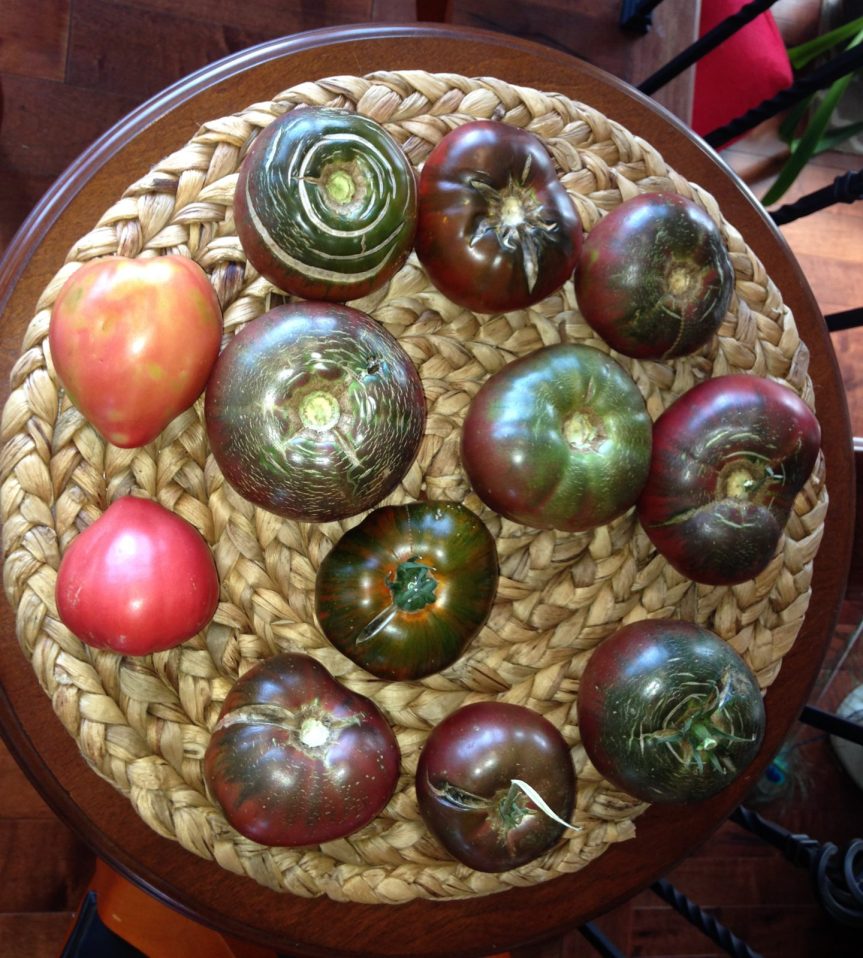
IMG_3494A sampling of the varieties I grew.  Front l to r:  Teensy Chocolate, Galina, Chocolate Stripes; Back l to r:  Zagadka, Black Krim and Cherokee Purple, Great White Blues; Middle l to r: Oregon Spring, Pink Paste 

This year was a bit of a disappointment compared to last year’s bonanza.  May was cooler than usual when the plants were set out at the end of the month.  June had many overnight lows in the 40’s which slowed growth down.  When it finally started to warm up with lows in the 50’s and 60’s in July, the plants were 2/3 the size they were last year, even the ones in the tomato accelerators.  Fruit did set heavily in July when it warmed up, but the yield wasn’t as good since the plants were smaller.  I also didn’t grow the same varieties as last year, so that was likely a factor. Luckily, mild weather continued into early October so we had a late and diminished but tasty harvest.

I plant tomatoes in grow bags and Earthboxes.  To keep the plants warmer, I use tomato accelerators from Gardener’s Supply, which are pop-up white plastic tubes.  You can also purchase a kit that comes with a grow bag and a staking system.

I usually order Black Krim and Cherokee Purple plants from Seed Savers Exchange.  They transplanted well, but grew slowly all of June and they were in the growth accelerators. I did plant one Black Krim in an Earthbox without protection and it did well although it was also smaller than last year’s vines.

One of the largest Black Krims of the season left; to the right Zagadka and Pink Paste go into the oven to roast and intensify their flavor before freezing. 

I tried two varieties successfully grown at 8000 ft in Colorado outside of the growth accelerators, and they set fruit well.  One was a determinate bred in Russia — Zagadka.  Although any homegrown tomato is better than the supermarket ones, Zagadka’s flavor and texture weren’t outstanding to my taste preferences. Its shape resembled the industrial supermarket tomatoes that are very firm and smooth and round – maybe that’s what put me off.  Its flavor was fairly tart, but not intense.

The cherry tomato Galina set lots of fruit and had fine flavor on the sweet side, but developed leaf diseases. Our cool June nights may have contributed and I was re-using potting soil. My plan is to grow a Galina and a Sungold to compare flavors. I’m also going to try to solarize the used potting soil this year to kill the fungal spores and bacterial diseases.

Another new to me tomato was  Oregon Spring, an older variety determinate tomato bred for cool climates. I picked up the seed at a home show from a vendor that grows them in Colorado. It set fruit well and staved off leaf disease until end of season. The flavor was good: tomato-ey, and on the tart side,  but it didn’t wow me.

Great White Blues (thanks to Nikki Jabbour for the recommendation ) was a pleasant surprise, setting fruit well in the non-protected earth box and setting huge fruit inside the protected tomato accelerator. I had a bit of trouble determining when it was ripe and let a couple go too long — they were mushy with not much flavor. However, picked when the white part was palest creamy yellow they had intense flavor a bit on the acid side, but nicely balanced.  I’m growing that one again.

A Great White Blues Becomes a BLT

I still had seeds of Chocolate Stripes that Craig Lehoullier sent me in 2018. I grew the rest of them this year. The fruit was about half the size of last year’s but still had good flavor.  I saved seed and will try again because this tomato is beautiful and has good balanced flavor.

I grew two dwarfs from seed Craig sent: Teensy Chocolate and Pink Paste with Antho (the dark bluish color from anthocynanins ). The cherry Teensy Chocolate was disease resistant and very tasty, but tended to split if not picked very carefully. I grew two Pink Paste plants which were quite different in character and flavor. One was about 2 inches long and pink with not a lot of antho.  I thought this one lacked flavor intensity. The other plant produced tasty 1-1/2 inch fruit with lots of bluish antho shoulders. I saved seeds and sent them back to Craig for further experimentation.

Seedlings on May 5 and the container garden on June 13. The plants went outside at the end of May and were significantly smaller than mid-June 2018, likely due to cool nighttime temperatures. 

Next year’s list is just started, but it will include Black Krim, Cherokee Purple, Great White Blues, Berkley Tie-Dye, San Marzano, and Sungold. I’ll try Galina again in fresh potting soil.

So now we are stuck with store-bought tomatoes until next season. At least there are some varieties available with more flavor than the pink flannel industrials. I hope you had a great tomato harvest if you grow them — I’m hoping for a milder start to the growing season here in 2020!

Horticultural Art Society

DemoGardenArtists
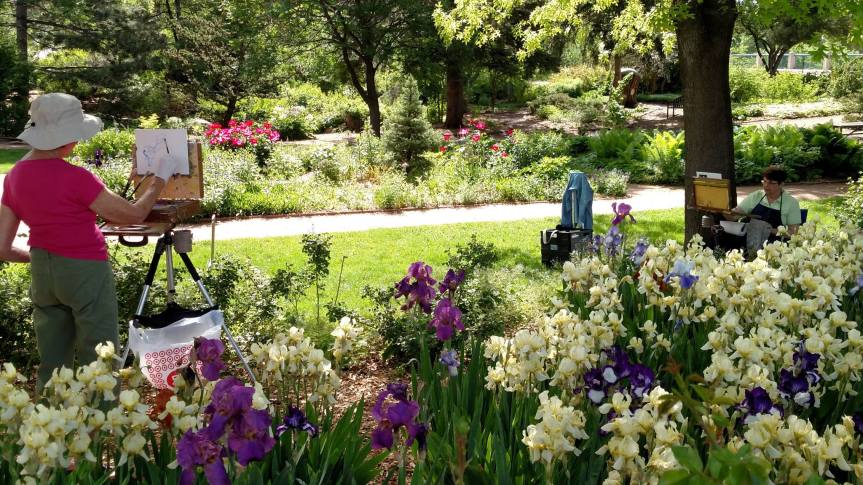
Artists enjoy many vignettes to paint in the HAS Demonstration Garden

I’d like to introduce you to the local gardening organization I belong to. When we moved back to the Springs, I immediately joined the Horticultural Art Society. I had fond memories of visiting their plant sale each year and taking some healthy and well adapted plants to my Black Forest home.  I knew I needed to learn more about gardening in our high altitude steppe climate and it has truly paid off.   I have learned so much from the lectures and tours this organization sponsors; I also volunteer once a week in their Demonstration Garden located just west of Colorado College at 222 Mesa Road.  You can follow Horticultural Art Society on Facebook to keep up with current events.

I currently write articles for the monthly newsletter.  You can read their latest newsletter here:  August Newsletter

Seeds!

Note: This is multi-part post updated on different dates.

March 28.  Vernalizing Seeds in the Refrigerator

We are about 8-9 weeks away from our average last frost date and it is time to start some seeds indoors.  Yesterday I planted red and green oak leaf lettuce outdoors in a grow bag.  We will have mild weather this week so hopefully it will germinate.  I am prepared to cover it up with an insulated box if we have a hard freeze, which is certainly not out of the question here!

I also have some seeds in the refrigerator which need a period of cold weather before they will germinate.  If I had planned better, I would have simply sown them outdoors last fall and let nature take care of it!  I’ll definitely be doing that with some native wildflowers this fall.  I currently have showy milkweed, monarda punctata, and Whipple’s penstemon in the fridge.

I took some sterile seed starting mix — not one with fertilizer.  I used Fertilome, which I got at my local nursery.  I put about a half cup of moist mix in two zip-locs, and one plastic container with a lid.  I put in the seeds and mixed it up well with my hand.  I labeled each with the date they are due to come out. Whipple’s comes out April 17, the others May 4.  I’ll update this post to let you know if I was successful with this method.

April 10.  Finally Planting Saved Delphinium Seeds

IMG_2087
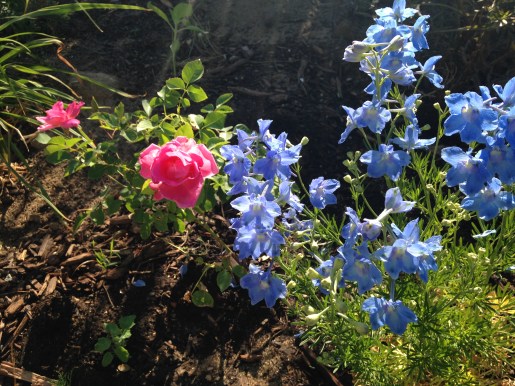
Butterfly Delphinium in My Garden Next to Rose Carefree Beauty

Today I’m planting some butterfly delphinium (delphinium grandiflorum) seeds indoors in a small flat.  I saved them from plants in 2017 in the event that they did not winter over-  they didn’t. They will go on the basement windowsill and hopefully germinate in around 18 days.  D. grandiflorum prefers a cool germination temperature so they will not be on the gro-mat.  I mistakenly put some parsley seeds on a gro-mat for a week before I reread the germination instructions!  In spite of my mistreatment, they came up in a cooler place after I moved them.

April 10.  Selecting the Tomatoes


fullsizeoutput_2173

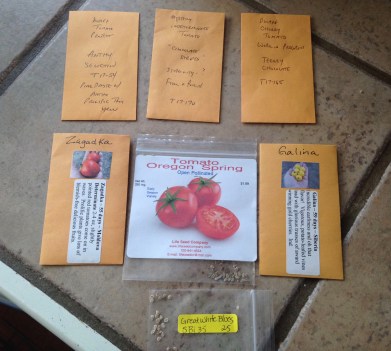
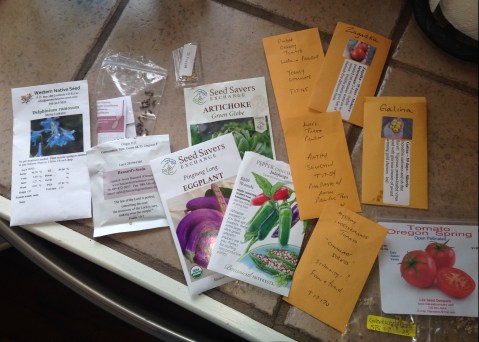
I am growing nine varieties of tomatoes this year. Cherokee Purple and Black Krim performed well for me last year, so  I ordered transplants from Seed Saver’s Exchange again.  I selected three dwarf varieties from a selection Craig LeHoullier sent me from his Dwarf Tomato Project.  I’m excited that he is writing a book about the 10 year global project to create delicious tomatoes that allow people with limited space to grow them!  This year I am growing Teensy Chocolate,  Pink Paste with Antho*, and an indeterminate that I grew last year and really liked, Chocolate Stripes.

Nikki Jabbour’s Instagram convinced me to try one called Great White Blues.   It ripens pale yellow or creamy white with dark shoulders.  She describes it as “mild and tomato-y with a hint of sweetness”.  I’m in!

I thought I was done until I volunteered at a home show where there was a local seed vendor. I picked up Oregon Spring, an older open-pollinated variety created at Oregon State University that is supposed to set fruit in cool weather.  Our cool nights here can make it difficult to set fruit.

And then I went to the Western Landscape Conference down in Pueblo and found Miss Penn’s Mountain Seeds with many– and I mean many– varieties of tomatoes that she grows at 8000+ feet! I selected two: Galina, a yellow indeterminate cherry tomato from Siberia and Zadagka, a small red determinate from Moldova that can be used like a paste tomato.  Both are supposed to mature in under 60 days.

*Antho tomatoes have dark shoulders produced by anthocyanins, a group of compounds that give color to various fruits and vegetables.  The blue color is produced mostly by the anthocyanin petunidin on the outside of the tomato where the fruit is exposed to direct sunlight.

April 12.  Starting Veggies and Flowers 

Today I have planted the tomato seeds, Japanese eggplant, jalapeno Jalafuego, and Grenada Seasoning pepper, which is supposed to be mild form of the habanero.

For flowers I’ve planted Echinacea angustifolia and pallida  and Delphinium racemosum, which is a native larkspur.

IMG_3169


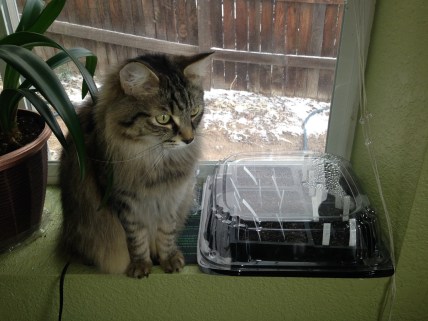
All the seeds are  on a gro-mat which keeps the soil at around 70 degrees. I’ll start zinnias soon.

IMG_3177

Seed flats in the windowsill on the mat — yes that is snow on the ground.  Isaac is not happy that there isn’t room for him to nap on the nice warm gro-mat. And now we wait.  Updates to come.


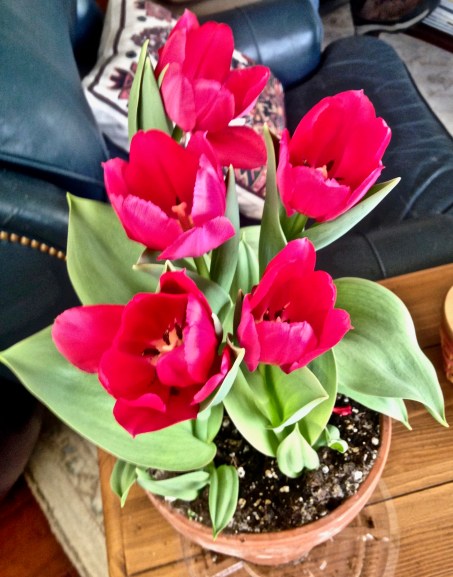
Tulips in February — Indoors of Course!

IMG_3072

Princess Irene Tulips

Last October I took a class on how to plant and grow spring flowering bulbs.  At the end of the class we all potted up some tulips or daffodils for forcing.

I put mine in our unheated garage  around October 30th  and about two weeks ago saw some pale tips poking up.  I brought them into the house, watered them and put them in my sunniest south facing window.  And now — voila!   

The foliage is so pretty too, lush and green.

Cheering me up immensely on this snowy, very cold day. 

Tomatoes 2018

A great year for tomatoes here at 6700 ft. I got seeds started late since we were traveling, and didn’t get seedlings hardened off and planted until the first week in June.

I ordered Black Krim and Cherokee purple plants from Seed Savers Exchange. The plants arrived looking very healthy and were set with the others to harden off.  From Victory Seeds I started Cancelmo, an indeterminate tomato described as being good for sauces and dwarf tomtato Purple Heart. Victory Seeds is a grower who offers dwarf tomatoes developed by  Craig LeHoullier and his colleagues around the globe during the past ten years. Craig is currently working on a book about the Dwarf Tomato Project.  You can follow his work and expertise at his website https://www.craiglehoullier.com/

I also was honored to get some seeds which Craig is trialing. I grew 3 of his selections and was very happy with all three. Two were dwarfs from the Lampy and Speckly line. One was an indeterminate called Chocolate Stripes which was sent to him by a friend.

Chocolate Stripes is beautiful when green — and ripe. 

Germination was good for all tomatoes, so I selected the sturdiest to continue on to maturity. This task is quite difficult for me, but I only have so much room!

Growing tomatoes in Colorado is challenging due to our cool summer nights and hail. Tomatoes do not like being hailed on by any size of the frozen balls from the sky. My handy husband designed and built a hail hoop from pvc pipe and hailcloth, which is a woven fabric which protects from most hail, and lets in a lot of light.

My tomatoes are all grown in containers. I have used the self watering earth boxes for several years and been happy with the results back in Raleigh, NC, but thought tomaotes needed some kind of additional protection to keep the temperatures warmer at night. A greenhouse is financially out of the question for this year, what to do?

I was poking around on the interwebs looking for something besides the tried and true Wall-O-Waters, when I saw something from Gardener’s Supply that looked promising — popup grow bag accelerators. Gardener’s Supply described them as a mini green house.   I liked the idea of collapsible storage and a zipper top that would help hold in more heat. and maybe provide some hail protection. I decided to order several and their tomato grow bags with a plastic cage style tower.

I decided I would leave the grow accelerators in place all season to help keep the plants warm at night. It was tricky to rig them up on the earth boxes, but it sort of worked.   I had great fruit set from all the dwarfs. They did get a bit confined as they grew and some fruit was misshapen due to the pressure of being pushed against the walls. The indeterminates just grew out the top and I didn’t have the fruit compression issue.

Dwarf tomatoes with grow bags tied down in hot weather on left.  Indeterminates growing out of the top of the bags on the right.

I used Earth Box fertilizer packs non-organic and Espoma Tomato Tone in the grow bags.  I watered daily by hand. Black Krim and Cherokee Purple were delicious and produced large fruits all season.  Chocolate Stripes was beautiful as well as tasty with somewhat smaller fruits.  Cancelmo surprised me with huge 7-8 ounce fruits.  They were great sliced and many ended up in the freezer for winter soups and sauces. I’m definitely going to grow Black Krim and Cherokee Purple next year!

On October 14 a hard freeze was forecast, so I harvested the green tomatoes that afternoon.

Tomatoes into the freezer and tomatoes saved from the deep freeze. 

Most of them ripened well in a box on the floor in bright light giving us flavorful tomatoes well into November!   We have recently made tomato soup from the bounty in the freezer.  I’ll be working hard to make 2019 and even better harvest.


Welcome!

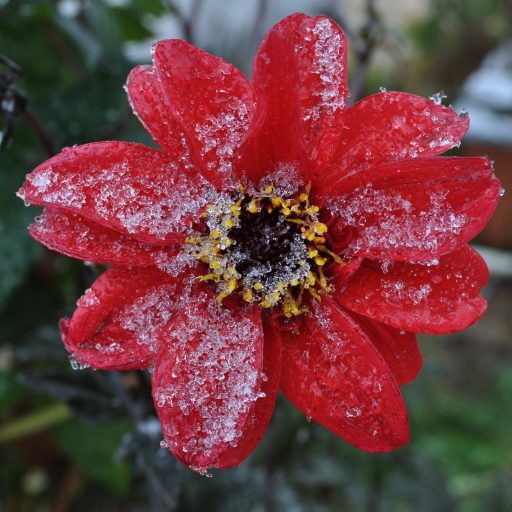
After 19 years of gardening in Raleigh, NC, we retired back to Colorado Springs, Colorado in 2017.  We love the cool summer nights and spectacular mountain views from our front yard. The growing season is shorter here, and you can get snow (or hail) on the dahlias, but beautiful gardens can be created with all-season interest.  We recently moved to a new home on a flat corner lot.  I am excited to turn this dirtscape into a waterwise landscape with lots of native plants to support birds, pollinators and wildlife.

Our “Blank Slate” Landscape in March 2022

The builder provided landscaping for the front yard and easement.  It’s ok but not what we have in mind.  They will plant 3 trees later this spring.  I want to add oval mulched areas with some xeric plantings to the easement to make it less stark.

fullsizeoutput_2132

Pikes Peak Sunrise